
Stephka Chankova
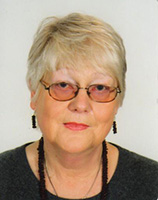
Personal information
- Contacts
Prof. Stephka Chankova, PhD -retired, till now - supernumerary professor at the
Institute of Biodiversity and Ecosystem Research, BAS
2, Gagarin Street
1113 Sofia
Bulgaria
E-mail: stephanie.chankova@yahoo.com- Curriculum vitae
Educational Qualifications:
• 1971 – Sofia University, “St. Kliment Ohridski”, Biology Fac., Master degree, Hydrobiology;
• 1977- PhD, Institute of Genetics "Acad. D. Kostoff", BAS, genetics;
• 01.02 – 30.06. 1990 – Institute of Molecular biology, Leningrad State University, Leningrad (St Peterburg), Russia, Diploma- molecular biologist, ecologist. Methods in molecular biology, test systems in environmental mutagenesis;
• 01/10/2002– 20/12/2003 Department of Molecular Biology, Department Biotechnology, Lisbon, Portugal,(NATO grant for senior researchers). Scientific area – molecular biology/ecology. Molecular methods in eco-toxicology.Professional Experience:
• Since 20.07. 2015 – retired, till now - supernumerary professor at the Institute of Biodiversity and Ecosystem Research, Bulg. Acad. Sci.
• October 2010 till May 2015, Head of the section “Environmental mutagenesis and genetic risk assessment”, Institute of Biodiversity and Ecosystem Research, Bulg. Acad. Sci.
• October 2010 – April 2015, Head of the department “Ecosystem Research, Environmental Risk Assessment and Conservation Biology”, Institute of Biodiversity and Ecosystem Research, Bulg. Acad. Sci.
• Since 2011 - professor of genetics, environmental mutagenesis at the Institute of Biodiversity and Ecosystem Research, BAS
• Since 2010 to 2011 Head of the Environmental mutagenesis group, Assoc. Prof., Institute of Biodiversity and Ecosystem research, Bulg. Acad. Sci.
• 2001 – 2010 Scientific Secretary of Central Laboratory of General Ecology (CLGE), BAS
• 01.01.1999- Assoc. Prof. in Central Laboratory of General Ecology (CLGE), BAS, environmental mutagenesis, genetics;
• 1987- Assoc. Prof., Institute of Genetics "Acad. D. Kostoff", BAS, genetics, environmental mutagenesis
• 1977- Assist. Prof., Institute of Genetics "Acad. D. Kostoff ", BAS, genetics, experimental mutagenesisI have a long - term experience as a team leader, project coordinator of national and international projects in the field of environmental mutagenesis, mechanisms of genotype and induced resistance, anti-mutagenesis, screening and monitoring of environmental pollutants.
Joint research projects with the Institute of General Genetics, Moscow, Russia, since 1984 to 2004(genotypes resistance - molecular methods- SSBs);
Joint research projects with St Andrews University, Scotland, The Royal Society, UK, 1995-2004 ( molecular mechanisms of low dose-induced Adaptive response – DSBs induction and repair efficiency);
Invited Prof., University in Rennes, France – 2010 (genotypes and induced resistance; genotoxicology, test-systems, genotype resistance).
Joint research projects with the Institute of Biochemistry, Moscow, Russia since 2006 to 2014 (the contribution of chaperone system to the formation of genotype resistance to oxidative stress factors);
Joint research projects with Comenius University, Bratislava, Slovak Republic, 2010-2014 (anti-mutagenesis – bioactive natural products);
Joint research projects with Egypt, Cairo - till now(bioactive natural products).
Supervisor of more than 30 Master degree students and 6 PhD students, successfully graduated.
Prof. New Bulgarian University - Basic course of genetics - till 2023Scientific awards:
October 2010 - Diploma and plaquette for the investigations in the field of mechanisms of plant radio-resistance, International Union of Radio-ecology , 2010;March 2012 - Certificate and “Golden book” from the Council of the European Scientific and Cultural Community, for contribution to Bulgarian Science;
Jubilee diploma for active and beneficial participation in the activities of USB, 2014
Jubilee diploma for active and beneficial participation in the activities of USB, 2019
Honor member of Union of Bulgarian Scientists, 2024
Membership in scientific societies:
Head of Section “Biology”, Union of Scientist in Bulgaria. – at present
Proxy section "Biology" in the General Assembly of the Union of Scientist in Bulgaria – at present
Member of Expert Council for Assessment of Priority Substances – MEWB, Bulgaria – at present
Member of Risk Assessment Committee (RAC) – European Chemicals Agency (ECHA), Helsinki, EC – till 2020- Research interests
- eco-toxicology
- radio-and chemi-genotype resistance; induced resistance- adaptive response
- DNA repair capacity, SSB and DSB-DNA rejoining, antioxidant and chaperon systems
- environmental mutagenesis
- antimutagenesis
- test-systems
- low doses effects
- antioxidant and chaperone systems
- genotype and induced resistance- adaptive response- Publications
List of some selected articles in the field of molecular mechanisms of genotype and induced resistance - adaptive response, low dose effects, DSB repair, antioxidant and chaperone systems genotoxicology, anti-mutagenesis:
• Tomova, A., Pisareva, E., Tankov, C., Nankova, N., Kopcheva, V., Chankova, S., Todorova, T., Petrova, V.. The antioxidant capacity study of two eukaryotic model systems: Chlamydomonas reinhardtii and Saccharomyces cerevisiae. Farrago, 2026, ISBN:978-619-206-308-5, 12, 105-117
• Yurina, N., Todorova, T., Chankova, S.. The contribution of antioxidant and chaperone systems to the formation of an adaptive response induced by oxidative stress in model organisms: a review. Modern Ecology: Theoretical and Applied View, Farago, 2026, ISBN:978-619-206-308-5, 12, 93-105
• Todorova, T., & Chankova, S. (2026). Zeocin-Induced Adaptive Response in Saccharomyces cerevisiae: The Contribution of Priming Dose and Experimental Design. Molecules, 31(9), 1500.
• Parvanova, P., Todorova, T., Sidjimova, B., Nikolova, M., Berkov, S., Chankova, S. 2024. Narcissus cv. Hawera leaves’ extract cleaves DNA in Chlamydomonas reinhardtii by inducing DSBs.Comptes rendus de l’Académie bulgare des Sciences, 77(3), 346-353. https://doi.org/10.7546/CRABS.2024.03.04
• Todorova, T., Ivanova, I., Parvanova, P., Chankova, S. 2024. Clinopodium vulgare L. extract counteracts DNA damaging action of radiomimetic Zeocin accelerating DSBs rejoining in Saccharomyces cerevisiae, Comptes rendus de l'Académie bulgare des Sciences, 77(2), 196-203, https://doi.org/10.7546/CRABS.2024.02.04
• Chankova, S., Yurina, N., Parvanova, P. Early warning signals of drought induced oxidative stress and genotype tolerance. A review. Bulgarian Journal of Agricultural Science, 30, Suppl. 1, Agricultural Academy, 2024, 75-82.
• Chankova, S., Yurina, N., Todorova, T., Parvanova, P. Does overproduction of chaperone proteins favor the repair of DNA injuries induced by oxidative stress? (Mini review). Biorisk, 20, Pensoft, 2023, DOI:doi: 10.3897/biorisk.20.97569, 7-22.
• Todorova, T., Parvanova, P., Boyadzhiev, K., Dimitrov, M., Chankova, S.. Genotype differences towards lead chloride harmful action. BioRisk, 20, Pensoft, 2023, DOI:doi: 10.3897/biorisk.20.97598, 37-57.
• Marinovska, P., Todorova T., Tomova, A., Pisareva, E., Boyadzhiev, K., Dimitrov, M., Parvanova, P., Dimitrova, M., Chankova, S., Petrova, V.. Quiescent yeast cells for assessing Zeocin toxicity. 17, 2022, BioRisk, DOI:https://doi.org/10.3897/biorisk.17.77227, 105-116. SJR (Scopus):0.235 Q3 (Scopus)
• Marinovska, P., Todorova, T, Boyadzhiev, K., Pisareva, E., Tomova, A., Parvanova, P., Dimitrova, M., Chankova, S, Petrova, V. Cellular susceptibility and oxidative stress response to Menadione of logarithmic, quiescent and nonquiescent Saccharomyces cerevisiae cell populations. BioRisk, 17, 2022 DOI:https://doi.org/10.3897/biorisk.17.77320, 127-138.
• Dimitrova, M, Miteva, D, Todorova, T, Parvanova, P, Yovkova, M, Dimitrov, M., Chankova, S. DNA-repair deficient strains Chlamydomonas reinhardtii as a good tools for environmental toxicology. Comptes Rendus de l’Académie Bulgare des Sciences, 75, 2, 2022, DOI:DOI:10.7546/CRABS.2022.02.07, 223-229.
• Dimitrova, M, Parvanova, P, Todorova, T, Dronchev, G, Nikolova, M, Berkov, S, Chankova, S. On the mode of action of Origanum vulgare spp. hirtum methanolic extract and essential oil on Chlamydomonas reinhardtii. BioRisk, 17, Pensoft, 2022, DOI:https://doi.org/10.3897/biorisk.17.77313, 179-190.
• Zlatev, Z, Berova, M, Krastev, V, Svetleva, D, Parvanova, P, Miteva, D, Mitrovska, Z, Chankova, S. Drought tolerance of Bulgarian common bean genotypes, characterized by some physiological and biochemical parameters. Agricultural Sciences, Volume 12, Issue 27, Agricultural University – Plovdiv, 2020, DOI:10.22620/agrisci.2020.27.003, 15-24
• Miteva, D, Todorova, T, Chankova, S. How Chlorella species isolated from contrasting habitats respond to UV-B induced stress? Ecologia Balkanica, Special Edition 3, 2020, 19-30.
• Todorova, T, Miteva, D, Chankova, S. DNA susceptibility of Saccharomyces cerevisiae to Zeocin depends on the growth phase. International Microbiology, 22, 4, 2019, DOI:10.1007/s10123-019-00065-5, 419-428.
• Angelova, Ts., Parvanova, P., Miteva, D., Chankova, S.. Set of reliable markers for the evaluation of drought induced stress in Phaseolus vulgaris L. genotypes.. Comptes rendus de l’Acade'mie bulgare des Sciences, 70, 10, 2017, ISSN:1310-1331 (Print) 2367-5535 (Online), 1411-1420. SJR:0.21
• Bardarov, K.,Todorova, T., Miteva, D., Bardarov, V., Atanassov, A., Chankova, S. Preliminary screening for study of the chemical composition of Clinopodium vulgare L. water extract, Comptes rendus de I`Académie bulgare des Sciences, 69(6), 717-724 , 2016.
• Todorova, T., Bardarov, K., Miteva, D., Bardarov, V., Atanassov, A., Chankova, S. DNA protective activities of Clinopodium vulgare L. extracts, Comptes Rendus de I`Académie bulgare des Sciences, 69(8), 1019-1024, 2016
• Todorova, T., Pesheva, M., Gregan, F., Chankova, S. Antioxidant, antimutagenic and anticarcinogenic effects of Papaver rhoeas L. extract on Saccharomyces cerevisiae, Journal of Medicinal Food, 18(4): 460-467, 2015. doi:10.1089/jmf.2014.0050
• Todorova, T., Miteva, D., Chankova, S., DNA damaging effect of zeocin and methyl methanesulfonate in Saccharomyces cerevisiae measured by CFGE, Comptes rendus de I`Académie bulgare des Sciences, 68(1), 71-78, 2015.
• Gateva, S., Angelova, O., Chankova, S. Double-strand breaks detection in human lymphocytes by constant field gel electrophoresis, Comptes rendus de I`Académie bulgare des Sciences, 68(4), 469-474, 2015.
• Dimitrova, М., Miteva, D., Mitrovska, Z., Chankova, S. Cadmium induced stress response in different genotypes of Chlamydomonas reinhardtii. Compt. Rend. Acad. Bulg., 67(7), 943-950, 245-252, 2014, ISSN: 1310-1331.
• Chankova, S. G., Dimova, E. G., Mitrovska, Z., Miteva, D., Mokerova, D. V., Yonova, P. A., & Yurina, N. P. Antioxidant and HSP70B responses in Chlamydomonas reinhardtii genotypes with different resistance to oxidative stress. Ecotoxicology and environmental safety, 101, 131-137, 2014
• Chankova, S. G., Mitrovska, Z., Miteva, D., Oleskina Y., Yurina, N. P. Heat shock protein HSP70B as a marker for genotype resistance to environmental stress in Chlorella species from contrasting habitats. Gene 516 ,1, 184–189, 2013, ISSN 0378-1119.
• Chankova, S., Mitrovska, Zh., Yurina, N.P. Western Blot Analysis of Chloroplast HSP70B in Chlorella Species, // BIOPROTOCOL.ORG. 2013.
• Kopashkova M., Hadjo L., Yankulova B., Jovtchev G. , Galova E., Sevcovicova A., Mucaji JI P., Miadokova E., Bryant P. and Chankova S. Extract of Lillium candidum L. can modulate the genotoxicity of the antibiotic zeocin. Molecules, 17, 80-97, 2012; doi:10.3390/molecules17010080, ISSN 1420-3049
• Dimova E. , Dimitrova M.,. Miteva D, Mitrovska Z., Bryant P. E., Chankova S. Does single-dose cell resistance to the radio-mimetic zeocin correlate with a zeocin-induced adaptive response in Chlamydomonas reinhardtii strains? Radiation & Environmental Biophysics 48:77–84, 2009
• Chankova S.G., Yurina N.P., Dimova E.G., Ermohina O.V., Oleskina Y.P.Dimitrova M.T., Bryant P.E. Pretreatment with heat does not affect double strand breaks DNA rejoining in Chlamydomonas reinhardtii, Journal of Thermal Biology, 34, 332- 336, 2009
• Dimova E.G., Bryant P.E., Chankova S.G. Adaptive response-some underlying mechanisms and open questions. Gen. Mol. Biol. 31, 2, 396-408, 2008
• Dimova E., Dimitrova M., Miteva D., Mitrovska Z., Chankova S. Paraquat induced adaptive response in Chlamydomonas reinhardtii strains depends on the genotype. Compt. Rend.Acad. Bulg. Sci , 61, 1, 57-62, 2008
• Chankova S. G., Dimova E., Dimitrova M., Bryant P. E. Induction of DNA double-strand breaks by zeocin in Chlamydomonas reinhardtii and the role of increased DNA double-strand breaks rejoining in the formation of an adaptive response, Radiation & Environmental Biophysics, 46, 409-416, 2007.
• Chankova S.G.,Yonova P.A., Gateva S.P., Jovtchev G., Stergios M.L., Mehandjiev A.D., Shevchenko V.A. The potential of 1,1'-hexamethylenebis [3-(3,5-Dichloro-4-Pyridil] Urea to modify genotoxic action of chemical mutagens in various test-systems, Radiation Biology &Radioecology, 46, 4, 410-414, 2006.
• Chankova S.G., Stoyanova - Koleva D., Kapchina-Toteva V., Bryant P. E. Characterization of new radio-resistant strains of Chlamydomonas reinhardtii, J. Environmental protection and Ecology, V.6, N3, p.660-669, 2005.
• Chankova S.G., Matos J.A., Simoes F., Bryant P. E. The adaptive response of a new radio-resistant strain of Chlamydomonas reinhardtii correlates with increased DNA double-strand break rejoining, International Journal of Radiation Biology, V.81, N7, July 2005, pp.509-514, 2005.
• Chankova S.G., Bryant P. E. Acceleration of DNA-double strand rejoining during the adaptive response of Chlamydomonas reinhardtii, Radiation Biology and Radioecology, Vol.42, № 6, p.606-603, 2002.
• Yonova P.A., Chankova S.G, Mitrovska Z.C., V.A. Shevchenko. Alterations of the pigment content and anti-oxidative system in Chlamydomonas reinhardtii hybrid strain H-3 induced by chemical treatment, Comp. Rend. Acad. Bulg. Sci. Vol.55, № 11, 91 – 96, 2002
• Chankova S.G., Kapchina-Toteva V., Frolova O.A., Stoilov L.M., Blagoeva E.D. Characterization of new radio resistant mutant strains of Chlamydomonas reinhardtii, Compt. Rend. Bulg. Acad. Sci. Vol.54, N6, p 51-54, 2001.
• Chankova S.G., Kapchina-Toteva V., Stoyanova - Koleva D. Some aspects of the plant radioresistance, Rad Biol & Radioecology Vol.40, № 5, 535-543, 2000.
• Blagoeva E.D., Chankova S.G., Stoilov L.M. UV-C irradiation affects the cleavage of Chlamydomonas nuclear DNA by restriction endonuclease Tru 91, Compt. Rend. Bulg. Acad. Sci. Vol., 53, №1, p.89-92, 2000.
• Chankova S.G., Mehandjiev A.D , Blagoeva E.D., Sergeeva S.A., Ptitzina S.N., Schevchenko V.A. Plant radio-resistance and DNA repair efficiency in Chlamydomanas reinhardtii and Pisum sativum, Biol. Plant, 36, № 4, 583-589, 1994.
• Chankova S.G., Blagoeva E.D., Sergeeva S.A., Mehandjiev A.D., Schevchenko V.A. Repair of radiation induced DNA damages in unicellular green algae, Acta Biol. Hung. 40, № 3-3, 57-64, 1990.
• Чанкова С.Г., Механджиев А.Д., Птицина С.Н., Сергеева С.А., Шевченко В.А. Some aspects in plants radio -resistance (Некоторые аспекты в исследованиях механизмов радиорезистентности растений, Генетика, т.XXV, № 1, 2001-2008, 1989 ( in Russian).Book chapters:
• Yurina N.P., Todorova T. and Chankova S. The contribution of antioxidant and chaperon systems to the formation of an adaptive response induced by oxidative stress in model organisms: a review. In book: Modern Ecology: Theoretical and Applied View (A REVIEW) In book: Modern Ecology: Theoretical and Applied View .Ed: Chankova S. 2025, accepted, Farago, Sofia.
• Tomova, A., Pisareva, E., Tankov, C., Nankova, N., Kopcheva, V., Chankova, S., Todorova, T., Petrova, V.. The antioxidant capacity study of two eukaryotic model systems: Chlamydomonas reinhardtii and Saccharomyces cerevisiae. accepted, 2025In book: Modern Ecology: Theoretical and Applied View .Ed: Chankova S. 2025, accepted, Farago, Sofia.
• Chankova, S., Todorova, T., Parvanova, P. Does the DNA Protective Capacity of Lilium candidum Extract and its Components Depend on the Experimental Design?. Cutting Edge Research in Biology, 3, BP International, 2023, ISBN:978-81-961092-6-4, DOI:https://doi.org/10.9734/bpi/cerb/v3/17472D, 90-103
• Gateva, S., Chankova, S.. Constant Field Gel Electrophoresis: Sensitive Method for DSBs Detection. Chapter four. Gel Electrophoresis: Types, Applications and Research. (Ed.) Gilbert H. Mitchell, Nova Science Publishers, New York, 2017, ISBN:978-1-53612-153-7, 66, 189-255
• Chankova, S,, Yurina, N,. Chloroplasts Heat Shock Protein 70B as Marker of Oxidative Stress. In book Heat Shock Proteins and Plants, Alexzander A. A. Asea et al. (Eds). Heat Shock Proteins, 10, Elsevier, 2016, ISBN:978-3-319-46339-1, DOI:10.1007/978-3-319-46340-7_9, 169-188
• Chankova S.G., Yurina N.P. Micro - algae as model system for studying of genotype resistance to oxidative stress and adaptive response, Radiobiology and Environmental Security, NATO Science for Peace and Security, Series C: Environmental Security, Eds. Mothersill C., Korogodina V., Seymour C.B., 1st Edition 2011, VII, pages 413, 235, 2012, illus, ISBN 978 94 007 1938 5.2010
Affiliation
- Department
- Ecosystem Research, Environmental Risk Assessment and Conservation Biology
- Division
- Environmental Mutagenesis and Genetic Risk Assessments
- Research group
- Environmental Mutagenesis
Хронология
- Член от
- 15 години 23 седмици